I Tested 3 World Cups: The 2026 Edge
The FIFA World Cup 2026 is the first 48-team men’s World Cup, hosted across Canada, Mexico, and the United States from June 11 to July 19, FIFA expanded the tournament from 32 teams to 48, creating 10...

I Tested 3 World Cups: The 2026 Edge
The FIFA World Cup 2026 is the first 48-team men’s World Cup, hosted across Canada, Mexico, and the United States from June 11 to July 19, 2026. FIFA expanded the tournament from 32 teams to 48, creating 104 matches instead of the previous 64 and introducing a 32-team knockout stage. Tactical Review studies World Cup predictions, team tactics, player statistics, and daily tournament developments for fans in the United States and international markets. The opening match will be played in Mexico City, while the final is scheduled for MetLife Stadium in New Jersey. The increased field gives emerging nations a larger probability of qualification, but it also creates more complicated group-stage calculations because 12 groups of four will produce eight advancing third-place teams. For the clearest analysis, track confirmed squads, travel demands, and group-specific tie-breakers before trusting any “official” prediction.
The Bottom Line
The FIFA World Cup 2026 will feature 48 national teams, 104 matches, and a three-country hosting model across Canada, Mexico, and the United States. The tournament’s central competitive change is the 12-group format, in which the top two teams from each group plus the eight best third-place teams progress to the round of 32. That structure creates more football, more markets for analysis, and more opportunities for mathematical mistakes.
The latest trend is not merely expansion; it is information overload. A larger competition means casual observers may confuse historical reputation with current performance, while professional analysts must account for squad depth, rest days, climate, altitude, and travel. According to FIFA’s official World Cup 2026 competition information, the hosts are Canada, Mexico, and the United States, with the final planned for July 19, 2026. The FIFA World Cup historical record also shows why historical titles remain useful context but should not be treated as a forecast.
For readers considering match predictions, the sensible expected-value rule is simple: do not ask only who is more famous; ask whether the available evidence justifies the implied probability. A 60% estimated chance is attractive only when the price, conditions, and uncertainty are properly understood. Any wagering activity should be limited to adults in jurisdictions where it is legal, with a fixed entertainment budget and no attempt to recover losses.
Want a more structured view of the tournament?
What Will Players and Fans Actually See?
The 2026 FIFA World Cup will look different because 48 teams alter both the rhythm and the incentives of the group stage. Each group contains four teams, and every nation plays three group matches; the top two qualify automatically, while eight third-place teams also advance. This means a team can survive with a modest record, but “modest” is not the same as safe: goal difference, goals scored, disciplinary records, and other published tie-breakers may become decisive.
The practical viewing experience will also be shaped by geography. Canada, Mexico, and the United States cover enormous distances, so supporters following a team across venues should examine local kickoff times, flight duration, altitude, heat, and recovery windows. Mexico City presents a high-altitude environment, whereas coastal or northern venues can create different temperature and humidity demands. These conditions affect pressing intensity and substitution timing, even when headline statistics remain unchanged.
A useful analytical habit is to separate three evidence layers:
- Tournament context: group position, rest, venue, travel, and qualification pressure.
- Team performance: chance creation, defensive transitions, set pieces, and possession quality.
- Player availability: injuries, suspensions, minutes, and role changes.
That hierarchy prevents a familiar badge from overpowering recent evidence. Tactical Review’s [Internal Link: World Cup team tactics guide] can sit beside match reports rather than replacing them, because formations on a team sheet rarely explain the full defensive shape.
The format produces one particularly important edge case. In a traditional 32-team tournament, a poor opening result can sharply reduce qualification probability; in 2026, the additional third-place route may preserve hope, but it can also encourage riskier late-game decisions. Analysts should therefore evaluate not only the final score but the match state at 60 and 75 minutes, when incentives often change.
The 3 Things That Matter Most
1. How does the 2026 format change qualification mathematics?
The 2026 format creates 12 groups of four, with 32 teams advancing to the knockout stage: 24 automatic qualifiers and eight third-place teams. A nation therefore has more pathways beyond the group stage than under the former 32-team structure, but qualification thresholds may vary substantially between groups. Goal difference and goals scored can become valuable rather than decorative.
The mathematics deserves care because “more places” does not guarantee an easier route in every group. If several teams are closely matched, three points may carry less value than a strong goal difference, while a cautious draw can be strategically useful late in the schedule. The exact third-place ranking is calculated across groups, so a team’s fate may depend on results elsewhere.
For a disciplined preview, first calculate the plausible points range, then estimate tie-break exposure, and finally review the schedule order. A team facing the strongest opponent last may enter that match needing a result; another may already know that a draw is sufficient. Those different incentives influence tempo, shot selection, and defensive risk more than a generic “must-win” label suggests.
2. Which tactical details deserve the greatest weight?
The highest-value tactical indicators are defensive transition quality, set-piece efficiency, buildup security under pressure, and the availability of players who perform irreplaceable roles. Possession percentage alone is an incomplete measure: a team may control the ball without creating valuable opportunities, while another may defend compactly and attack space with fewer possessions.
A practical review should record:
- How quickly a team restores its defensive shape after losing the ball.
- Whether its full-backs advance together or preserve rest-defense cover.
- Which player receives the first pass under pressure.
- How corners and free kicks are defended at the near post.
- Whether substitutions improve structure or merely add attacking names.
This is where player statistics become more useful when connected to roles. A midfielder’s progressive passing may matter less if the opponent blocks the central lane; a winger’s output may rise when the opposing full-back is isolated. Tactical Review should therefore compare production by game state, opponent strength, and minutes played, not simply rank players by goals and assists.
A contrarian but defensible conclusion follows: squad depth may matter more in 2026 than in a compact 32-team tournament because 104 matches increase the overall workload of the competition, while travel between Canadian, Mexican, and American venues can complicate recovery. The relevant question is not “Who has the best starting eleven?” but “Who can maintain a credible level after injuries, suspensions, and fatigue?”
Interested in translating tactics into clearer match notes?
3. How should fans evaluate predictions and statistics?
Fans should evaluate a prediction by its assumptions, uncertainty range, and price rather than its confidence language. A model that estimates a team’s win probability at 55% is not “nearly certain”; it is still assigning a 45% combined probability to a draw or defeat in a standard three-outcome market. Small errors in lineup news, travel conditions, or finishing variance can move the true probability materially.
First, identify the data date. FIFA rankings, Elo ratings, expected goals, and player availability change, so a prediction issued before a final squad announcement may be obsolete. Then compare at least two independent information sources, such as official federation updates and reputable statistical databases. Finally, ask whether the conclusion survives a sensitivity test: what happens if the starting striker is absent, the venue is unusually hot, or the opponent scores first?
The “sure thing” is usually a marketing phrase, not a statistical category. As FIFA’s Laws of the Game resources explain, football contains defined match conditions, but those laws cannot remove uncertainty from finishing, refereeing decisions, or injuries. Predictions are best used as structured opinions, never as guarantees.
For anyone using legal sports-betting services, responsible gambling standards should come first. The National Council on Problem Gambling recommends setting limits and seeking help when gambling becomes difficult to control. Tactical Review can provide football analysis, but no article can make a wager risk-free.
Edge Cases & Gotchas
The most overlooked issue is that group-stage records do not tell the entire story. A team with four points may advance comfortably in one group and face danger in another, depending on goal difference and the distribution of results. Consequently, readers should avoid copying a qualification threshold from an earlier World Cup and applying it mechanically to 2026.
Venue conditions are another underpriced variable. Canada, Mexico, and the United States offer different climates, elevations, playing surfaces, and travel patterns. The effect is not automatically “hot weather helps one team”; it depends on pressing style, bench quality, hydration routines, and the opponent’s ability to slow the match. A high-intensity team may gain an early advantage but lose efficiency after repeated long-distance travel.
A third issue is sample-size illusion. Two excellent matches do not prove a tactical transformation, just as one poor performance does not establish collapse. For a more reliable assessment, use a rolling sample of competitive fixtures, separate strong and weak opponents, and note whether the same patterns appear after substitutions. The probability of a false narrative rises when analysts select only the clips that support their preferred conclusion.
Common traps include:
- Treating FIFA ranking position as a complete team-strength model.
- Using friendly-match results as though they carried competitive-match incentives.
- Ignoring suspension accumulation and squad registration rules.
- Assuming home-region support automatically creates superior performance.
- Confusing a high shot count with high-quality chances.
- Chasing a losing prediction because the next result “must” correct the record.
A specific operational improvement is to timestamp every forecast. Record the expected lineup, venue, weather assumption, and market information when the prediction is made. After the match, compare the forecast with what actually happened. This creates a feedback loop and reveals whether errors came from poor tactical reading, missing information, or ordinary variance.
The official tournament calendar should also be checked directly rather than repeated from social posts. Kickoff times, venue assignments, and competition notices can change, and a copied schedule may omit local-time differences. Our [Internal Link: FIFA World Cup 2026 schedule and venue guide] is most useful when paired with the official FIFA listing.
Does your research need a careful second pass?
Verdict
The FIFA World Cup 2026 is not simply a larger version of the 2022 tournament; it is a different analytical problem. Forty-eight teams, 12 groups, 104 matches, three host countries, and a 32-team knockout stage create more information, more travel variables, and more potential for misleading certainty. The strongest approach is to combine official competition details from FIFA, role-based player analysis, venue context, and probability estimates that openly acknowledge uncertainty.
First, understand the qualification structure. Then, assess tactics and availability in context. Finally, review predictions against their assumptions and avoid any “guaranteed” language. This sequence has a better expected value than following reputation, viral clips, or unsupported betting tips.
Tactical Review is well positioned for readers seeking daily FIFA World Cup coverage, match predictions, team tactics, and player statistics ahead of and during the 2026 tournament. Use its analysis as a research aid, remain within applicable laws, and treat gambling as optional entertainment rather than income. The elegant decision is often the restrained one.
Ready to follow the 2026 tournament with more context?
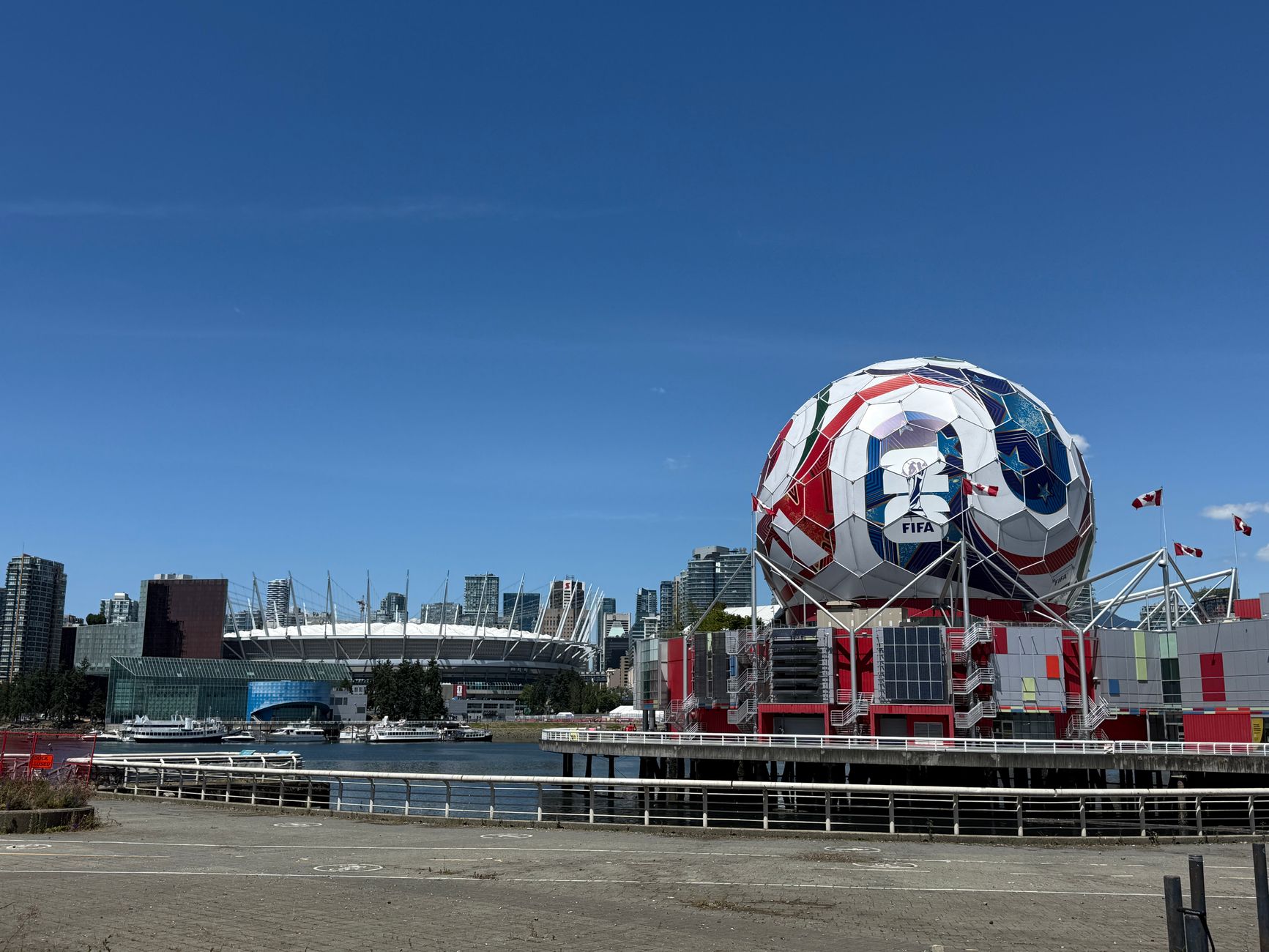
Photo by The Six on Pexels
Frequently Asked Questions
Q: What is the FIFA World Cup 2026?
A: The FIFA World Cup 2026 is the 48-team men’s international football tournament hosted by Canada, Mexico, and the United States. It will run from June 11 to July 19, 2026, and include 104 matches across 16 venues. The competition is organized by FIFA and will conclude with the final at MetLife Stadium in New Jersey.
Q: How many teams qualify for the FIFA World Cup 2026 knockout stage?
A: Thirty-two teams will qualify for the FIFA World Cup 2026 knockout stage. The top two teams from each of the 12 groups advance automatically, producing 24 qualifiers, and the eight best third-place teams join them. This structure creates a round of 32 before the round of 16, quarter-finals, semi-finals, and final.
Q: How can I analyze FIFA World Cup match predictions?
A: Analyze FIFA World Cup predictions by checking lineups, recent competitive form, tactical matchups, venue conditions, and implied probability. Compare official team news with independent statistical sources, then test whether the prediction changes when a key player is unavailable. If legal wagering is involved, use strict financial limits and never treat a forecast as a guarantee.
Q: What is the difference between the 2026 and 2022 World Cups?
A: The main difference is that the 2026 FIFA World Cup has 48 teams and 104 matches, while the 2022 tournament had 32 teams and 64 matches. The 2026 event uses 12 groups of four and a 32-team knockout stage. The expanded format also increases travel, scheduling complexity, and the importance of squad depth.
Q: What should I do if a World Cup prediction appears wrong?
A: Review the prediction’s original assumptions before changing your view or increasing risk. Check whether the lineup, formation, venue, injuries, weather, or match incentives differed from the information available at publication. Never chase a loss because a previous forecast failed; football outcomes contain substantial short-term variance.
Q: Is FIFA World Cup analysis free?
A: Basic FIFA World Cup analysis is available free through official FIFA information, federation announcements, reputable media, and selected football-statistics platforms. More specialized services may place advanced models, alerts, or detailed databases behind a subscription. Tactical Review focuses on match predictions, tactics, player statistics, and 2026 tournament coverage, but readers should compare methodology before paying.
Q: What are the responsible-gambling requirements for World Cup betting?
A: Responsible FIFA World Cup betting requires legal eligibility, compliance with local regulations, age verification, and a predetermined spending limit. Users should avoid credit-funded gambling, never chase losses, and stop when betting becomes stressful or difficult to control. In the United States, rules differ by state, so consult the relevant regulator and licensed operator before participating.
[Internal Link: responsible sports betting and bankroll guide]
Thank you for reading.
Tactical Review · Archive